How Virtual Reality Could Transform Slot Machines
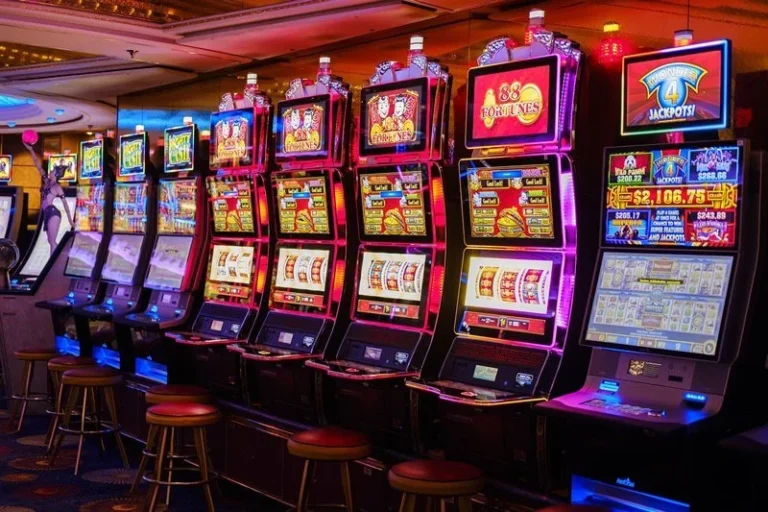
The global casino gaming market has entered a mature digital era. For decades, the leap from physical, mechanical slot machines to digital screen-based video slots represented the pinnacle of industry innovation. Today, whether a player engages with a gaming cabinet on a physical casino floor or spins a digital reel on a smartphone, the foundational user experience remains anchored to a flat, two-dimensional plane.
However, the continuous evolution of spatial computing and consumer hardware is positioning Virtual Reality (VR) as the next major paradigm shift in casino entertainment. By removing the boundary of the flat screen and placing the user directly inside a fully rendered, stereoscopic environment, virtual reality can fundamentally redefine how players interact with slot machines. This transformation moves beyond cosmetic styling, restructuring the core elements of environmental psychology, game mechanics, social engagement, and narrative immersion.
Spatial Immersion and Environmental Psychology
The primary limitation of traditional online slot games is their inability to replicate the sensory atmosphere of a high-end land-based casino. Physical casinos are masterclasses in environmental psychology, precisely utilizing ambient lighting architectures, specialized acoustic footprints, and spatial layouts to foster a sense of luxury, isolation, and comfort. Flat mobile or desktop interfaces struggle to capture this enveloping presence.
Virtual reality transforms this dynamic by introducing total spatial immersion. When a player puts on a VR headset, they are no longer sitting in a home office or looking at a phone on public transit. Instead, they are instantly transported into a meticulously crafted virtual environment.
This space can be a perfect digital twin of an ultra-luxury casino resort, a futuristic sci-fi lounge orbiting a distant planet, or an atmospheric historical setting matching the precise theme of the slot machine itself. By capturing the full field of view and utilizing spatial, head-tracked audio, VR captures the neurological indicators of presence. This level of environmental control alters the player’s cognitive state, making the gaming experience feel like a dedicated entertainment destination rather than a casual web-based transaction.
The Evolution of Interactive Game Mechanics and Formats
In a traditional slot game, user interaction is highly limited. The player selects a bet size and taps a button or screen to trigger a spin, functioning essentially as a passive observer waiting for an automated mathematical calculation to resolve. Virtual reality can completely dismantle this passive loop, introducing tactile, three-dimensional physics and true spatial interaction.
Physical Lever Tracking and Gesture Controls
Rather than clicking a digital icon, a player standing before a virtual reality slot machine can reach out their hand, grip a fully modeled 3D lever, and physically pull it down to initiate the spin. Advanced hand-tracking technology and haptic feedback controllers allow users to feel the resistance of the mechanism, the vibration of the spinning reels, and the impactful clunk of the stopping symbols.
Volumetric Bonus Lobbies
The most radical gameplay transformation occurs when a slot game transitions into a bonus round. In a legacy slot machine, a bonus round shifts the player to a secondary flat screen to pick random objects or spin a wheel. In a virtual reality environment, the entire slot cabinet can dissolve, plunging the user directly into a volumetric, room-scale bonus lobby.
-
Interactive Environments: If the game is themed around an ancient tomb exploration, the player can physically walk through 3D ruins, utilizing their hands to open stone chests, dodge virtual traps, and gather hidden treasures that translate directly into financial multipliers.
-
Skill-Based Integration: VR allows for the seamless integration of first-person skill elements, such as throwing projectiles at moving targets or navigating simple spatial puzzles, bridging the gap between real-money gaming and mainstream video game loops.
Reintroducing Social Architecture to Digital Gaming
A significant drawback of modern online gambling is its inherent social isolation. Traditional digital slots are a solitary pursuit, lacking the organic energy, casual banter, and shared celebration that define live casino environments. Virtual reality rectifies this isolation by constructing a persistent, shared social infrastructure.
Within a VR casino ecosystem, players navigate the environment via customized digital avatars. Users can walk down rows of virtual slot cabinets alongside friends or global players, observing their physical movements, gestures, and reactions in real time.
When a player triggers a major jackpot celebration, nearby avatars can gather around to watch the bonus round unfold, offering congratulatory gestures or communicating via built-in directional voice chat. This social layer transforms online slots from an isolated behavioral loop into a vibrant, community-driven social destination, which is highly effective at attracting younger, digitally collaborative demographics.
Personalized Modular Interfaces and Infinite Screen Real Estate
Physical casino cabinets are bound by the strict laws of material manufacturing and fixed hardware dimensions. A physical machine has a set screen size, a fixed button panel configuration, and a permanent location on the gaming floor. Virtual reality completely eliminates these material constraints, providing developers with infinite digital canvas space.
In a VR gaming environment, the user interface can become entirely modular and tailored to the individual player’s physical comfort. A user can scale the slot display to the size of an IMAX theater screen, position real-time statistical readouts and return-to-player data feeds floating gently in their peripheral vision, and anchor multiple games simultaneously within their field of view.
Furthermore, if a player suffers from physical fatigue or restricted mobility, they can adjust the entire spatial configuration, tilting the virtual cabinet or lowering the control nodes so they can play comfortably from a reclining position without losing any interactive fidelity. This flexibility moves the concept of user choice far beyond standard software setting menus.
Immersive Brand Partnerships and Transmedia Content
The spatial freedom of virtual reality opens up unprecedented avenues for high-concept brand cross-overs and media integration within the slot industry. Traditional slot machines often license intellectual property from major Hollywood films, television franchises, or popular musical acts, but this branding is restricted to basic video clips and static audio tracks.
Virtual reality allows for genuine transmedia experiences where the boundaries between linear entertainment and wagering blur. A player engaging with a branded superhero slot machine could find themselves sitting alongside fully animated 3D characters who provide narrative commentary throughout the session.
When a premium milestone is hit, the player could be lifted out of the casino floor entirely to experience a cinematic 3D flying sequence or an interactive set-piece derived straight from a motion picture. This level of cross-industry branding elevates the slot machine from a basic gambling tool into a premium extension of global entertainment franchises.
Advanced Behavioral Analysis and Adaptive Compliance
As virtual reality hardware incorporates internal tracking arrays, it provides operators with unprecedented streams of real-time behavioral data. Next-generation headsets feature advanced eye-tracking cameras, facial expression sensors, and precise biometric monitoring systems. While this data holds immense commercial value for optimizing game mechanics and visual pacing, it also creates a powerful framework for proactive responsible gaming and regulatory compliance.
Artificial intelligence algorithms integrated into the VR platform can continuously evaluate a player’s biometric responses during a session. The system can track subtle indicators of cognitive distress, such as rapid acceleration of eye movement, prolonged fixation on losing zones, or physical tension patterns in hand gestures.
If the algorithm determines that a player is entering a state of compulsive chasing behavior or experiencing emotional distress, the virtual reality environment can gracefully intervene. The platform can softly dim the visual stimuli, introduce gentle ambient notifications advising a voluntary pause, or automatically adjust the cabinet environment to display accessible responsible gaming resources, setting a new standard for ethical consumer protection in the digital age.
Frequently Asked Questions
Will virtual reality slot machines require expensive, high-end personal computers to run?
While early iterations of high-fidelity VR software required robust desktop hardware and dedicated graphics cards, the industry trend has shifted decisively toward standalone, self-contained headsets. Modern virtual reality slot platforms utilize mobile optimization architectures and cloud-based graphic rendering, allowing detailed 3D casino environments to stream smoothly directly onto standalone devices without requiring a secondary computer.
How do virtual reality slots address the issue of motion sickness for sensitive players?
Motion sickness in virtual reality is typically triggered by artificial locomotion, where a player’s visual field moves while their physical body remains completely stationary. Virtual reality slot experiences minimize this conflict by utilizing static room-scale layouts or zero-latency teleportation mechanics. Because the player remains firmly anchored in front of a stationary slot machine cabinet, the fluid-dynamic systems of the inner ear remain balanced, eliminating motion disorientation.
Can a player use real physical currency or tokens inside a virtual reality casino environment?
Virtual reality environments operate on entirely cashless, digital payment frameworks. Players fund their secure ecosystem wallets using traditional credit cards, digital payment applications, or verified decentralized assets prior to entering the virtual space. Inside the VR lounge, these funds are represented visually as traditional physical chip stacks, loyalty tokens, or digital coin balances that interact realistically with the 3D cabinet mechanics.
How do operators verify a user’s legal gambling age inside an immersive VR headset?
Age and identity verification occur prior to the spatial environment loading, utilizing mandatory multi-factor authentication and biometric verification linked to the player’s registered account. Users must complete a comprehensive onboarding process that includes scanning government-issued identification cards and executing real-time facial recognition checks, ensuring absolute compliance with regional legal gambling age thresholds.
What happens if a VR headset loses power or disconnects mid-way through a high-value bonus round?
All next-generation virtual reality slot platforms operate on a synchronized server-side state architecture. The moment a spin is initiated or a bonus round is triggered, the mathematical outcome is calculated and secured on the operator’s remote database, completely independent of the user’s local display. If a headset loses power, the round completes safely in the background, and all corresponding winnings are immediately credited to the player’s account balance.
Are virtual reality slot games subject to the same regulatory testing as traditional slot machines?
Yes, virtual reality slots are subject to identical, rigorous testing protocols enforced by international gaming commissions and independent auditing bodies like GLI or eCOGRA. The underlying random number generators, return-to-player percentages, and payout matrices must pass strict certification standards. The regulatory bodies evaluate the novel 3D interface elements to ensure they do not mislead players or distort the perception of game outcomes.