The Role of Visual Effects in Slot Machine Engagement
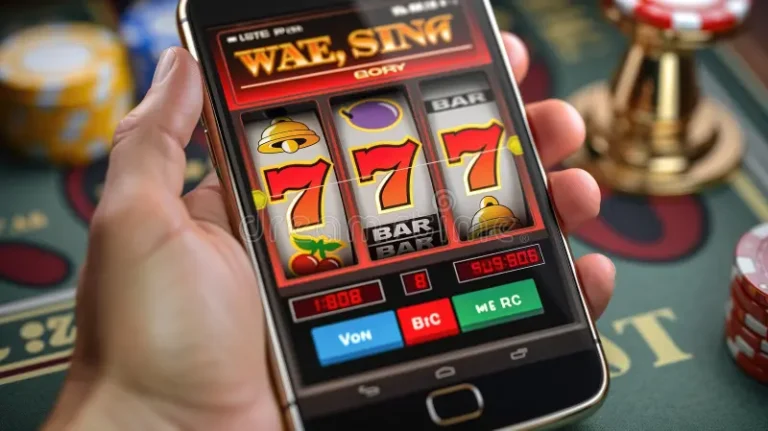
The modern slot machine is an advanced feat of digital entertainment, cognitive psychology, and software engineering. It has evolved significantly from the mechanical three-reel devices of the past, which relied on simple iron levers, physical gears, and painted strip reels. Today, both physical casino cabinets and digital online slot applications function as multi-sensory media platforms designed to capture and hold human attention.
At the center of this modern design philosophy is the strategic application of visual effects (VFX). While the mathematical framework of a slot machine—known as the return-to-player (RTP) percentage and volatility matrix—dictates its long-term financial outcomes, the visual interface drives real-time player engagement. Visual effects do not merely serve as cosmetic decoration. Instead, they operate as a primary psychological conduit, translating abstract mathematical probabilities into immersive, emotionally resonant experiences that sustain player interaction.
The Cognitive Psychology of Visual Stimuli in Gaming
To understand why visual effects are so effective at driving engagement, one must analyze how the human brain processes environmental rewards. Slot machines operate on a psychological mechanism called a variable ratio schedule of reinforcement. This means that rewards are delivered at unpredictable intervals, creating a high level of anticipation and cognitive focus.
Visual effects act as the primary feedback loop for this reinforcement schedule. When a player achieves a winning combination, the event is accompanied by high-fidelity visual stimuli, including bursting golden coins, flashing neon borders, and three-dimensional character animations.
This immediate sensory feedback triggers a release of dopamine in the brain, creating a sense of pleasure and accomplishment. Over time, the player’s neurological system pairs the anticipation of these vibrant visual displays with the act of wagering, cementing a habitual loop of continuous interaction.
Enhancing the Perception of Winning via Near-Miss Mechanics
One of the most complex applications of visual effects in slot machine design is the orchestration of the near-miss phenomenon. A near-miss occurs when a player initiates a spin and the resulting symbols fall just short of triggering a massive payout or a premium bonus round. For example, two scatter symbols might lock into place while the third and final scatter symbol stops just one position outside the active payline.
From a strict mathematical standpoint, a near-miss is identical to a standard loss; the player receives no financial return on their wager. However, cognitive psychology reveals that the human brain interprets a near-miss as a state close to winning rather than a failure. Visual effects are deployed precisely to highlight and emphasize these specific moments through distinct visual treatments:
-
Reel Anticipation Slowdowns: The platform will automatically decelerate the spinning speed of the final remaining reel, stretching out the time window of anticipation.
-
Visual Border Accents: The physical borders around the incomplete winning symbols will pulse with glowing energy fields, shifting focus directly to the near-miss zone.
-
Illuminated Tracking Panels: Background graphics may shift color or intensify in brightness to communicate to the user that a major event was narrowly missed.
By utilizing these specialized visual cues, developers transform a routine losing outcome into an exciting, high-arousal event. The player feels encouraged to initiate another spin, operating under the cognitive illusion that they are on the cusp of a major breakthrough.
Narrative Packaging and Character Integration
As the digital gaming market has become highly saturated, operators can no longer rely solely on basic geometric shapes or simple fruit symbols to maintain competitive player retention. Modern slots have largely transitioned toward rich narrative themes, borrowing heavily from the visual design language of cinematic blockbusters and mainstream video games.
Visual effects are the primary tool used to construct these thematic worlds, which often feature ancient civilizations, mythological pantheons, or futuristic sci-fi landscapes. Many top-tier modern slot games embed a fully animated 3D character directly next to or above the main reel grid.
These characters do not remain static; they react dynamically to the player’s session velocity and specific game states. If a player experiences a prolonged stretch of losing spins, the character may exhibit signs of anticipation or encouragement. When a bonus round triggers, the character leaps across the screen, interacting directly with the reels to transform standard symbols into wild multipliers. This narrative packaging creates an emotional connection, shifting the consumer’s motivation from pure financial speculation to immersive media consumption.
The Mechanics of Big Win Displays and Payout Celebrations
The apex of slot machine engagement occurs during a major payout celebration, commonly categorized in game development as a Big Win, Mega Win, or Colossal Win. The visual effects utilized during these specific milestones are engineered to maximize the player’s sense of personal validation and luxury.
When a high-tier win threshold is crossed, the standard reel grid frequently recedes into the background, replaced by a dominant, centrally positioned numerical counter. The numbers rapidly escalate upward while particles of gold coins, diamonds, or thematic icons erupt outward from the screen, utilizing complex physics engines to simulate natural mass and gravitational bounce.
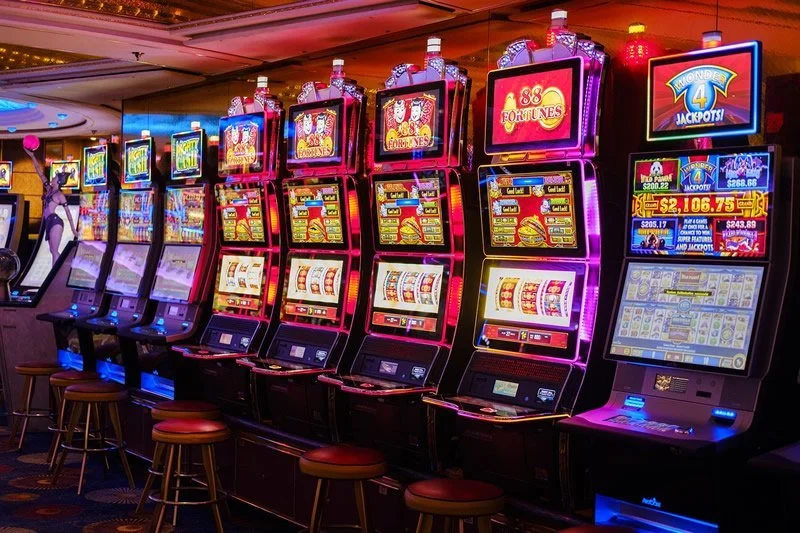
The extensive duration and intense visual scaling of these celebrations serve a dual purpose. In a physical casino environment, the blinding visual displays and flashing cabinet lights draw the attention of nearby patrons, creating a localized spectacle that reinforces the perception that the casino floor is paying out heavily. In a digital online environment, these grand animations provide a major dopamine milestone that satisfies the user’s desire for peak entertainment value.
Transitions to Secondary Screens and Interactive Bonus Lobbies
Long-term engagement is deeply dependent on breaking up the monotony of continuous reel-spinning. Next-generation slot games achieve this variation by incorporating secondary-screen bonus lobbies, which function essentially as micro-video games embedded within the core gambling application.
The transition from the primary base game to a specialized bonus round represents a critical aesthetic shift where visual effects take absolute priority. Developers use dramatic visual techniques to signify that the player has entered a premium game state:
-
Environmental Color Shifting: The entire color palette of the game interface shifts instantly, often transitioning from neutral background tones to deep, high-contrast golds, reds, or neon purples.
-
3D Camera Matrix Shifts: The visual perspective rotates from a flat, two-dimensional view of the reels into a dynamic, angled three-dimensional camera flythrough of a new environment.
-
Augmented Interface Overlays: Standard betting meters are temporarily replaced by stylized progression tracks or custom prize-wheel interfaces.
These massive visual shifts communicate to the player that they have reached a protected, high-value zone where their earning potential is significantly elevated. This visual differentiation keeps the gameplay loop feeling fresh, unexpected, and engaging over prolonged multi-hour sessions.
Frequently Asked Questions
Do advanced visual effects cause processing lag or latency during digital slot gameplay?
Modern slot developers mitigate local hardware latency by utilizing lightweight deployment models, such as HTML5 vector rendering, alongside advanced cloud-based graphic compression. This architecture ensures that complex 3D particle systems and video transitions are processed primarily on backend servers rather than forcing the consumer’s local smartphone or desktop device to handle intense graphical compilation, resulting in seamless, zero-latency execution.
How do developers ensure that intense flashing visual effects do not compromise player safety?
Responsible game developers and international regulatory bodies enforce strict compliance guidelines regarding photosensitivity and visual patterns. Before a slot machine can be licensed for public distribution, its visual assets must pass specialized software scans designed to detect rapid flashing frequencies or repeating high-contrast visual loops that could trigger adverse reactions in individuals with photosensitive epilepsy.
Why do some slot games feature retro, low-fidelity graphics if advanced visual effects improve engagement?
The global slot market contains diverse consumer segments with varying aesthetic preferences. While younger demographics often gravitate toward cinematic, high-VFX modern video slots, an established segment of traditional players prefers the minimalist nostalgia of retro three-reel fruit machines. Operators include low-fidelity options to cater to these purists who view complex animations as a distraction from pure mathematical probability.
Can a player deactivate or customize the visual effects inside an online slot interface?
Yes, the vast majority of regulated next-generation online slot applications include a settings menu that grants users control over their visual environment. Players can activate a Turbo Mode or Fast Play option, which systematically strips away victory animations, reel deceleration effects, and transition sequences, condensing the gameplay down to immediate, rapid mathematical outcomes.
How are visual effects used to distinguish between high-volatility and low-volatility slot games?
Visual design language reflects the underlying mathematical risk profile of the title. Low-volatility games, which pay out frequent but small rewards, typically employ soft, bright color schemes and playful, highly frequent celebratory animations. High-volatility games, which offer rare but massive payouts, lean toward dark, dramatic, and intense atmospheric visuals that build tension during the long dry spells between wins.
What is the role of visual effects in community or multiplayer slot tournaments?
In multiplayer tournament structures, visual effects are essential for fostering a sense of active competition. Platforms utilize real-time visual leaderboards, dynamic progress bars that track rival players’ scoring velocities, and distinct on-screen notifications that flash whenever a competitor in the same tournament pool triggers a major bonus round, driving collective engagement through peer-to-peer rivalry.